
There will come a point in your life where you’ll have your role reversed. All of a sudden, the parents who once took you to the doctor or cheered you on at your graduation have become the ones who need your steady hand to navigate the stairs. It won’t be easy; not preparing will undoubtedly make the whole ‘caring for my elderly parent’ harder.
We have crafted a step-by-step guide to help you, as adult children, navigate this journey.
Step 1 – Assess Your Parents Needs
Evaluate Daily Living Abilities
Step one in caring for an elderly parent is finding out what sort of abilities your loved one can and cannot do, as abilities usually diminish gradually with age. However, the goal here isn’t to find faults or make assumptions, but to paint a clear picture of the overall independence level so you can provide the proper support.
Use the Activities of Daily Living (ADLs) framework
The easiest and most practical way to figure out your parents’ ability is by using the ADL framework. This framework helps you determine how well your parent can manage basic day-to-day tasks necessary for living independently. Without these abilities, living alone is definitely out of the equation. Here are the basic 6 that you need to know:
- Bathing
- Dressing
- Eating
- Transferring
- Toileting
- Continence
Observe Behavioral & Emotional Changes
Next, observe any changes in behavior and emotion. More often than not, these changes can tell you more about your parents’ health than physical signs alone. If your parent was once a social person and has become distant from family, friends, and communities, something must be wrong. Apart from physical condition, however, these signs can also signal underlying depression, anxiety, or worse, cognitive decline.
Keep track of patterns, when the changes began, what triggers them, and how severe they are. Also, don’t forget to ask ‘How are you feeling these days?’ consistently, as this will show that you care without making them feel judged or cornered.
Talk Openly With Your Parent
Just as parents do for their children, it’s natural that you want to take charge when caring for parent, since you feel like you know what’s best for them. Remind yourself that your parent is still an adult with opinions, preferences, and a personal life. Avoid lecturing, instead, invite them into the discussion as a partner in planning their care.
Always be ready for any sort of reaction when having this tough conversation. Some may feel defensive out of fear of losing control, while others may be more open. Regardless, let your parents consider the idea and revisit it later if necessary. At the end of the day, the goal is to make better decisions together that truly reflect your parents’ needs and wishes.
Step 2 – Create A Care Plan
Involve Family Members
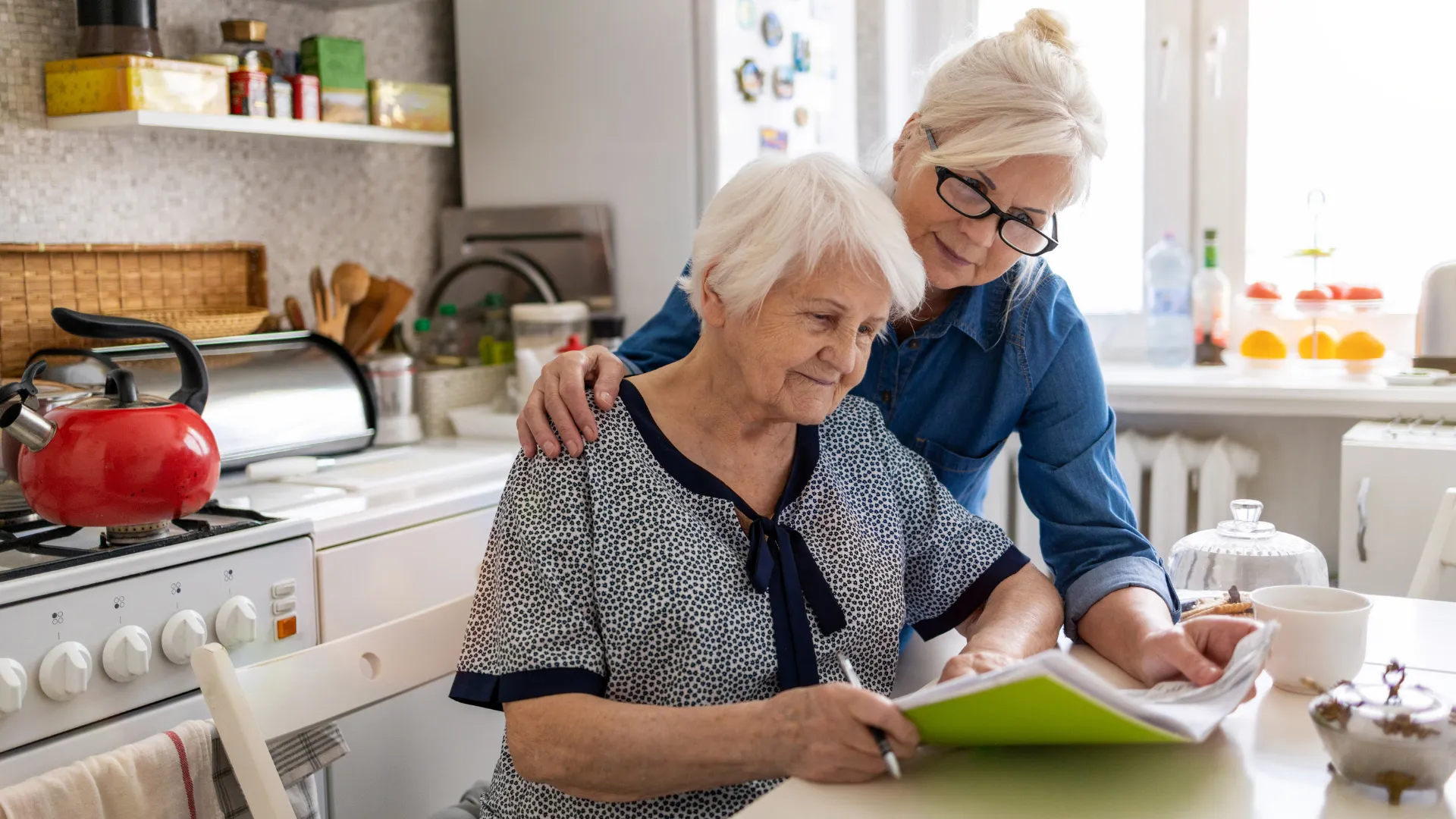
They say it takes a village, no one has more obligation than another, and vice versa. After your loved one is ready for care, gather your family to create a care plan that shares the responsibilities fairly. Start by discussing who can help and how.
Even the smallest contributions, such as regular phone calls from those who provide long-distance caregiving, can make a significant difference. When everyone is involved and communicates openly, caring for an elderly parent can become more manageable for everyone, preventing burnout.
Set A Routine
Setting a predictable routine will create structure that results in less anxiety, especially for a loved one with cognitive impairment. Simple things like waking up, eating meals, taking medications, and going to bed at the same time each day can make a huge difference in your parent’s sense of stability and well-being.
A well-planned routine also benefits you as a caregiver. Not only does it help you anticipate needs more efficiently, but it enables you to plan your day more effectively. In the long run, having a steady rhythm makes caring for your elderly parent smoother, less stressful, and more balanced.
Keep Medical Information Organized
More than 50% seniors in the US have more than one chronic disease, meaning most have multiple doctors, medications, and appointments that can be easily forgotten. Organizing all medical information, including medical histories, test results, prescriptions, and insurance details, either digitally or physically, can save a significant amount of time during appointments. More importantly, it can be life-saving for your loved one in an emergency.
Step 3 – Learn The Qualities Of A Good Care Giver
Patience & Empathy
What sets a regular caregiver apart from a good one is the ability to show patience and empathy in challenging moments. We won’t sugarcoat anything, caring for an elderly parent can be emotionally and physically challenging. There will be days filled with frustration due to the inability to do something that used to be easy.
Only patience can get you through the caregiving journey by allowing you to step back, breathe, and respond with understanding. Empathy, on the other hand, helps you put yourself in your aging loved one’s shoes, allowing you to see how mood changes and stubbornness often stem from fear and frustration.
Reliability & Responsibility
A caregiver is only as good as they are reliable. When taking the role of caring for my elderly parent, you’re expected to be dependable. Showing up when you say you will, following through on tasks, and making sure your parents’ needs are being met will certainly bring peace of mind to your parents and families. That being said, it’s important not to set unrealistic expectations that you, yourself, cannot fulfill.
Communication Skills
Being able to speak clearly can make everyday interactions with your parents, and other parties involved, much easier. Equally important in caring for an elderly parent is the ability to listen without judgment. With this particular skill, you can understand what your parents are trying to say or express through their tone or body language, making them feel valued and understood.
Knowing When To Seek Professional Help
No matter how devoted you are, there will be moments in caring for your elderly parent when professional help becomes necessary. If you think that means you’re giving up, don’t. On the contrary, it means you’re being a responsible adult child who always ensures your parents’ needs are taken care of.
Ideally, what’d be best for your parents is being able to live in their own cherished home full of memories, but still getting the support needed for their safety and well-being. Thankfully, in-home caregiver services, like those provided by Sunny Days In-Home Care, make that possible.
Step 4 – Explore In-Home Care Options
Benefits Of Professional Home Care
 If you’re still doubting whether or not to give professional home care a chance, let us tell you why. First off, your parents get to stay in the comfort of their own home while receiving the level of care they truly need, comfortably and safely. Additionally, care can be tailored to every unique situation, condition, and preference.
For you and your family, having a trained caregiver eases the burden and reduces stress as it gives you and your family a chance to rest and actually enjoy each other’s company, rather than constantly worrying about caregiving duties.
Types Of In-Home Care Services
One thing an adult child should remember is that there’s no one-size-fits-all solution when caring for an elderly parent. Depending on your parents’ particular needs, several options can be chosen, ranging from personal care that focuses on assisting with bathing, grooming, and dressing, to meal preparation, light housekeeping, and companionship that offers real benefits for both cognitive and emotional health through social engagement.
Step 5 – Take Care Of Yourself Too
Recognize Signs Of Caregiver Stress
When caring for my elderly parent becomes part of your daily life, your parents’ needs may easily become the only needs that matter. But this approach often leads to burnout and, eventually, ineffective care.
To make sure you can offer the best care possible in the long run, recognizing signs of caregiver stress, like constant fatigue, irritability, sleep disturbances, or feeling emotionally drained, should be your first step. Only when you can recognize it, can you prevent them from growing into something more serious that prevents you from being the supportive, compassionate caregiver your parents need.
Practice Self-Care
All of you must have heard the announcement on a commercial plane, “put on your oxygen mask before you put on others.” Practicing self-care is one way of achieving it. It doesn’t have to mean big changes; it can be as simple as taking a walk, spending time with friends, meditating, or getting enough rest.
Although small, self-care helps keep you balanced and energized, allowing you to care for your loved ones with all your heart.
End Note
At the end of the day, caring for my elderly parent is not just a responsibility, it’s an act of love, patience, and respect. The journey will have its share of challenges, from navigating emotional changes to managing daily routines. Still, it will also bring moments of connection and gratitude that make it all worthwhile.
With thoughtful planning, open communication, and the willingness to seek help when needed, you can create a nurturing environment where your parent feels valued, safe, and supported.
If you ever feel that you could use an extra hand, Sunny Days In-Home Care is here to help. Contact our team today for more caregiving information.